White Paper
Faith | Exit | Diversification (FED)
Strategic Readiness Saving Faith, Necessitated Migration, and Asset-Building Opportunities for the Khoja Community Beyond the West
Introduction
In recent years, members of the Khoja community living in Western countries, particularly students, migrant workers and families with children in Western Europe, including the UK, have faced growing challenges. The days when comfortably practicing faith, expressing opinions, pursuing education or migration to Western destinations was relatively accessible are now behind us. Islamophobia, stricter immigration policies, visa processes more complex, and economic opportunities harder to secure. Rising costs of living, tightening labour markets, and broader social challenges further complicate prospects.
Historically, our community has demonstrated resilience and adaptability. Just as our ancestors transitioned from Kutch and Kathiawar to East Africa and beyond, we too must show strategic foresight in navigating today’s global landscape. The time has come to move beyond a Western-centric migration mindset and diversify settlement destinations to secure a stable and prosperous future while safeguarding our faith and identity.
This paper is neither a reverse-migration paper nor an exodus from the West proponent. On the contrary, it is a paper that seeks to optimise for the Khoja Shia Ithna-Asheris in Europe, and by extension globally.
The following white paper outlines the Faith | Exit | Diversification (FED) framework, providing actionable insights into strategic migration planning, its necessity-driven nature, and the responsibility of believers to safeguard and propagate the tenets of Islam during intidhaar (awaiting Imam Mahdi, ATFS).

FAITH:
Migration in Islam: Between Necessity and Intention
Migration (hijrah) in Islam is not merely a physical relocation, it is a moral and spiritual act rooted in purpose, intention, and responsibility. It has always been part of the believer’s journey, sometimes out of necessity to preserve faith, and at other times to seek growth, stability, and opportunity in the path of Allah (SWT).
Qur’anic Foundation
The Qur’an presents both dimensions of migration, necessity and opportunity:
وَمَنْ يُهَاجِرْ فِي سَبِيلِ اللَّهِ يَجِدْ فِي الْأَرْضِ مُرَاغَمًا كَثِيرًا وَسَعَةً ۚ وَمَنْ يَخْرُجْ مِنْ بَيْتِهِ مُهَاجِرًا إِلَى اللَّهِ وَرَسُولِهِ ثُمَّ يُدْرِكْهُ الْمَوْتُ فَقَدْ وَقَعَ أَجْرُهُ عَلَى اللَّهِ ۗ وَكَانَ اللَّهُ غَفُورًا رَحِيمًا
This verse emphasizes that migration in the way of Allah is not only a response to hardship but a means to “abundance” (سَعَةً) — representing opportunity, security, and spiritual reward. Migration becomes sanctified when it is driven by sincere intention and directed toward serving faith.
At the same time, the Qur’an warns against remaining in oppressive or spiritually suffocating environments:
إِنَّ الَّذِينَ تَوَفَّاهُمُ الْمَلَائِكَةُ ظَالِمِي أَنْفُسِهِمْ قَالُوا فِيمَ كُنْتُمْ قَالُوا كُنَّا مُسْتَضْعَفِينَ فِي الْأَرْضِ قَالُوا أَلَمْ تَكُنْ أَرْضُ اللَّهِ وَاسِعَةً فَتُهَاجِرُوا فِيهَا
This establishes migration as an obligation when faith and dignity are endangered.
A Balanced View: Seeking Both Faith and Flourishing
Islam encourages believers to live in balance, striving for both worldly improvement and spiritual perfection.
Imam Ja’far al‑Sadiq (a) said:
اِعْمَلْ لِدُنْيَاكَ كَأَنَّكَ تَعِيشُ أَبَدًا، وَاعْمَلْ لِآخِرَتِكَ كَأَنَّكَ تَمُوتُ غَدًا
This balance shows that seeking a better livelihood, safety, or education is not condemned — provided that one’s faith remains central. Migration for growth and stability can itself become an act of worship if motivated by service to Allah and the betterment of family and community.
Imam ʿAlī (a) also highlighted the benefits of purposeful movement:
سَافِرُوا تَصِحُّوا وَتَرْزُقُوا، فَإِنَّ فِي السَّفَرِ خَمْسَ فَوَائِدَ: تَفْرِيجُ هَمٍّ، وَاكْتِسَابُ مَعِيشَةٍ، وَعِلْمٌ، وَآدَابٌ، وَصُحْبَةُ الْأَفَاضِلِ
Thus, purposeful migration can bring worldly and spiritual enrichment when guided by right intention.
Sayyid Muneer al‑Khabbaz’s Guidance on Migration and Presence in the West
In an ICAIR seminar held in London (August 2025), the President of CoEJ, Br. Arifali Hirji, asked the Esteemed Sayyid Muneer al‑Khabbaz, the question of migration, especially when the identity and practice for Muslims in the West is under threat. His message emphasised presence over withdrawal and institutional strength over dispersion. Key points included:
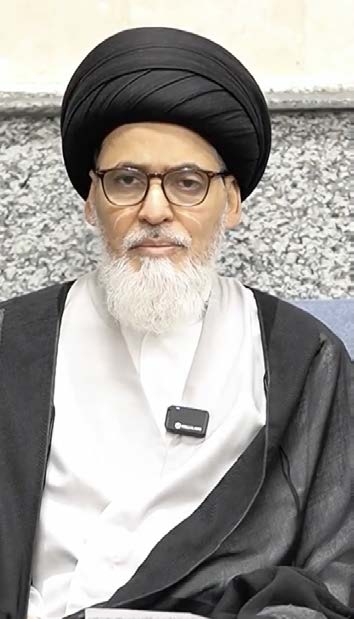
- Responsibility to Remain and Represent: Sayyid Muneer emphasised that Muslims, particularly the followers of Ahlulbayt (a), have a responsibility to remain in the West, not as passive residents but as active representatives of Islam. Their presence contributes to the spread of the Shia school of thought and the demonstration of Islamic values through conduct, education, and service.
- Building Institutions and Identity: He stressed the importance of establishing mosques, community centres, schools, and seminaries. Utilising local laws and freedoms, believers must secure Islamic education for their children. He noted that having access to religious schooling (this means community catered Madaris as well as Faith Schools) is a criterion for remaining in the West - as it ensures faith continuity.
- Visible and Distinct Identity: Sayyid Muneer advised that believers maintain their identity through majālis, religious commemorations, and even the use of traditional Shia names. Such visibility fortifies the community’s collective spirit and prevents cultural dilution.
- Strategic Presence, Not Comfort-Driven Residency: He reminded believers that remaining in the West should not stem from a pursuit of comfort but from a sense of mission — to establish a “heavy and known presence” that benefits society, defends Islamic values, and prepares the ground for the return of Imam al-Mahdi (ATFS).
Migration During the Period of Intidhaar
In this period of intidhaar (awaiting the Imam al‑Mahdi, ATFS), believers must understand migration as part of their divine duty, whether they stay or move. The goal is not comfort or escape, but empowerment and readiness. Communities should remain resilient, self‑sufficient, and globally connected to strengthen the cause of justice and guidance.
Migration, therefore, is not inherently discouraged; rather, it is a tool for empowerment when aligned with faith and purpose.
Conclusion
Migration in Islam is neither a rejection of one’s homeland nor a pursuit of luxury; it is a moral decision guided by intention. A believer who migrates to protect faith, seek better opportunity to serve, or provide
قَالَ الإِمَامُ الرِّضَا (ع): خَيْرُ النَّاسِ مَنْ يَنْفَعُ النَّاسَ
Wherever a believer resides, whether in East or West, the true measure of migration lies not in comfort or geography, but in purpose: the extent to which faith, service, and moral strength are preserved and advanced.
Exit
Migration as a Last Resort in Faith Preservation
Exit as Necessity, Not Voluntary Action
The concept of exit in Faith Exit Diversification is rooted in the Islamic principle that migration must only occur when it is no longer possible to preserve faith, dignity, and safety in one’s current environment. Scholars advise that believers in the West (Gharb) have a responsibility to spread Islam, defend its tenets, and prepare for the return of Imam Mahdi (ATFS). Migration, therefore, must not be undertaken lightly or voluntarily but only when necessary.
Islamic Guidance on Migration
The Quran and the teachings of the Prophet Muhammad (peace be upon him and his family) emphasise that migration should only be a means to uphold faith and protect one’s identity:
وَمَنْ يُهَاجِرْ فِي سَبِيلِ اللَّهِ يَجِدْ فِي الْأَرْضِ مُرَاغَمًا كَثِيرًا وَسَعَةً ۚ وَمَنْ يَخْرُجْ مِنْ بَيْتِهِ مُهَاجِرًا إِلَى اللَّهِ وَرَسُولِهِ ثُمَّ يُدْرِكْهُ الْمَوْتُ فَقَدْ وَقَعَ أَجْرُهُ عَلَى اللَّهِ ۗ وَكَانَ اللَّهُ غَفُورًا رَحِيمًا
This verse affirms that migration for the sake of Allah is a noble act but underscores that it is a necessary step, not a voluntary pursuit of comfort or convenience.
Exit Plans as a Strategic Necessity
An exit plan is not an abandonment of the responsibility to propagate Islam but a proactive measure to ensure the community’s survival during times of extreme adversity. The temporary nature of migration must always be emphasized, with the ultimate goal of returning to a place where Islam can flourish.
Key Aspects of Exit Planning:
- Necessity‑Driven Action:
- Exit plans should only be activated in times of necessity when faith, safety, or dignity is at risk.
- Temporary Migration:
- Migration should be seen as temporary, with the intention of returning once conditions improve.
- Faith Preservation:
- Exit plans must prioritise the ability to practice and propagate Islam in new destinations.

Diversification
Preparing for Economic and Strategic Stability — not putting all eggs in one basket
The Importance of Diversification
Diversification is a crucial pillar of the FED framework. It emphasises the need to broaden settlement destinations, economic opportunities, temporal places for niche and higher education, and community resources to ensure long‑term survival and prosperity. While Faith and Exit address the spiritual and migratory dimensions, Diversification focuses on economic resilience and strategic preparation, enabling the community to thrive despite external challenges.
Qur’anic Guidance on Diversification and Economic Preparedness
The Quran provides timeless examples of how believers can prepare for future uncertainties through careful planning and diversification. A notable example is the story of Prophet Yusuf (AS), who implemented a strategy to manage Egypt’s resources during a time of abundance, preparing for the subsequent years of famine:
قَالَ تَزْرَعُونَ سَبْعَ سِنِينَ دَأَبًا فَمَا حَصَدْتُمْ فَذَرُوهُ فِي سُنْبُلِهِ إِلَّا قَلِيلًا مِمَّا تَأْكُلُونَ، ثُمَّ يَأْتِي مِنْ بَعْدِ ذَلِكَ سَبْعٌ شِدَادٌ يَأْكُلْنَ مَا قَدَّمْتُمْ لَهُنَّ إِلَّا قَلِيلًا مِمَّا تَحْصِنُونَ
This story teaches us the importance of economic preparedness, resource management, and diversification during periods of stability to withstand future adversity.
According to a valid tradition, Mu’ammar ibn Khallad has reported that he heard Imam al‑Ridha (‘a) recounting the following:
A man came to Ja’far al‑Sadiq (‘a) to try to give him advice. “O Abu‑‘Abdullah,” said the man, “Why have you separated the funds in scattered sectors. If they were all put in one occupation, it would be easier to supervise and provide greater benefit.”
The Imam (‘a) answered:
إخْتَلَفْتُهَا مُتَفَرِّقَةً، فَإِنْ أَصَابَ هَذَا الْمَالَ شَيْءٌ سَلِمَ هَذَا الْمَالُ، وَالصُّورَةُ تَجْمَعُ ذَلِكَ كُلَّهُ
Hence diversification is a very smart way of planning for contingencies and to optimise.

Economic Diversification for the Khoja Community
The Khoja community, historically known for its entrepreneurial spirit and adaptability, must continue to embrace economic diversification to prepare for potential challenges. This includes expanding into new industries, investing in sustainable ventures, and identifying opportunities in emerging markets. Key areas of focus for economic diversification include:
- Investing in Emerging Markets:
- Encouraging members of the community to explore opportunities in regions such as Southeast Asia, Africa, and South America, which offer growing markets for trade and investment.
- Promoting small and medium enterprises (SMEs) in sectors like technology, renewable energy, and healthcare.
- Strengthening Community Assets:
- Building community-owned businesses, educational institutions, and healthcare facilities to ensure self-reliance.
- Establishing endowments (waqf) and trusts to fund social and religious programs.
- Encouraging Skills Development:
- Preparing the next generation by equipping them with skills in high-demand fields such as technology, artificial intelligence, and global trade.
- Promoting vocational training and entrepreneurship programs within the community.
- Developing Local Economies:
- Investing in agriculture, trade, and manufacturing in developing regions to create employment opportunities for the community and others.
- Collaborating with local governments and organizations to establish hubs for economic activity.

Proposed Action Points for Diversification
- Economic Collaboration Across Federations:
- Foster economic partnerships between regional federations to pool resources and expertise for large-scale projects. We need to probably look at a shared, halal banking system.
- Investment in Sustainable Ventures:
- Establish community-led funds to invest in renewable energy, healthcare, and education, ensuring long-term benefits for the community.
- Strengthening Local Economies:
- Encourage community members to engage in trade, agriculture, and manufacturing in underdeveloped regions, creating opportunities for growth and resilience.
Example of Country Prospects to Look Further At
| Country | Summary | Faith Friendly | Economic Diversification | Infrastructure & Amenities |
|---|---|---|---|---|
 Philippines Philippines |
English‑speaking, affordable living costs, and opportunities in BPO, healthcare, and IT sectors, alongside an open environment for business and religious expression. | Yes. Promising for practicing faith. | Needs research, however key contacts are available. | Very promising |
 Thailand Thailand |
Affordable living, strong healthcare and tourism industries, a developing tech sector, and a tolerant cultural environment. | Faith tolerant over the last decade | Has great economic growth potential | Promising |
 Paraguay Paraguay |
An emerging South American option with investor-friendly policies, affordable residency, agricultural potential, and scope for building community institutions. | Has potential | Has great economic growth potential | Challenging from a health and Higher Education perspective. |
 Tanzania Tanzania |
Religious conducive, great economic prospects, familiarity, “reverse migration”. Khoja familiarity, language advantage (English and Swahili). | Yes | Very promising | Challenging from a health and Higher Education perspective. |
 Oman Oman |
A stable Gulf nation offering investor residency programs, moderate living costs, and opportunities in tourism, logistics, and energy. | Yes | Promising. Many have initiated journey — first‑hand stories available. | High standards |
 Qatar Qatar |
High‑income potential, tax‑free salaries, and opportunities in energy, healthcare, and infrastructure for skilled professionals. | Not very conducive to the 12’ers for permanent settlement. | For high‑earners. Entrepreneurs — needs further research. | High standards |
 Indonesia Indonesia |
A Muslim-majority nation with a growing halal economy, expanding middle class, and cultural-religious affinity. One of the South East Asian countries that has a great economic potential to ‘Boom’ | Limited for the 12’ers. But needs further work | For high‑earners. Entrepreneurs — needs further research. | Has options. Needs research |
Note: We are not at this stage endorsing the above countries, rather just expressing a list of countries that a working group may look closer at.

Proposed Action Points (Summary)
To ensure the community is fully prepared for emerging risks, vulnerabilities, and potential threats, the following actionable recommendations are proposed:
- Regional Risk Assessment: Establish dedicated groups within the regional federations (CoEJ, NASIMCO, Africa Federation, etc.) to monitor risks and develop an Early Warning System for political, social, and economic threats.
- Contingency & Resettlement Planning: Create detailed and funded contingency plans, identifying five pre‑vetted resettlement locations per region based on healthcare, jobs, entrepreneurial growth and education.
- Building an Expert Panel: Recruit members from the global Khoja diaspora with expertise in religious, migration, economics, business, and geopolitics, ensuring regional representation.
- Economic Diversification:
- Collaborate Federations: Build partnerships, co‑investments and explore a shared halal banking system.
- Sustainable Funds: Invest in renewable energy, healthcare, and education.
- Boost Local Economies: Promote trade, agriculture, and manufacturing.
Conclusion
- Living in the West can not be taken for granted, especially with Islamophobia on the rise.
- The strategic plan is based on 3 foundations: Faith, Exit and Diversification, each intertwined.
- The primary objective is to fulfil the duty towards our religions and preparedness in the time of ‘Intidhaar’.
This means that we can not have immigration as a primary goal. On the contrary, it is to live
our lives in Europe centred around protecting and anchoring our faith, the “F”. - If by any necessity, we need to have an exit plan. We have made an early list of countries to exit to in the section “E”.
- Even before an exit, we would need to have a Diversified investment. For the countries, some of the countries’ attractiveness have been listed in the section “D”
Proposed Action Points
To ensure the community is fully prepared for emerging risks, vulnerabilities, and potential threats, and to optimise for opportunities, the following actionable recommendations are proposed:
- Setup the FED Working Group Objective: This Working Group would keep an up-to-date repository of countries and geographies that would be most attractive to Exit and Diversify investments in. This group would consist of members from European Jamaats who have a special interest and expertise that would contribute towards this subject.
- Regional Risk Assessment Objective: This same group would identify vulnerabilities, risks, political changes, and trends that may threaten the ability to practice faith, as well as risks of political persecution and economic distress for Shia and Muslim communities.
- Contingency & Resettlement Planning Objectives:
- (i) To be prepared for any emergency.
• Create detailed and funded contingency plans for emergencies.
• Identify five optimal, pre-vetted resettlement locations, chosen based on:
▪ Conducive for our community’s faith.
▪ Employment opportunities.
▪ Entrepreneurship
▪ Quality of education.
▪ Availability of healthcare.-
(ii) Pin down an Economic Diversification plan based on:
• Collaborate Federations: Build partnerships, co-investments and explore a shared halal banking system.
• Sustainable Funds: Invest in renewable energy, healthcare, and education.
• Boost Local Economies: Promote trade, agriculture, and manufacturing.
We would expect that similar working groups, with objectives like above, would be set up in other regions:
- North America: NASIMCO
- Africa: Africa Federation
- Australasia: Khoja Communities Australasia
- Pakistan: Pakistan Federation
- India: India Federation
Collectively, these working groups would report and furnish The World Federation of KSIMC with a compressive and optimal action plan.

Appendix
Philippines
Compilation of Healthcare & Education, by Shaykh Mujahidali Sheriff:
- Health Care (click here)
- Higher Education (click here)
Tanzania
Short-term fact forecast, Br Arifali Hirji:
Oman
Migration to Sultanate of Oman shared to Africa Federation by Br Mahmood Sherali Bhogadia:
- Fact file (click here)