Safety and Security of Our Members and Jamaats in Europe
At the Fourth Executive Council Meeting for Term 2024–2027, members reviewed and discussed the Safety and Security of Our Members and Jamaats in Europe White Paper, a key policy initiative focused on strengthening safety measures across CoEJ Jamaats.
At the Fourth Executive Council Meeting for Term 2024-2027, there was a presentation and discussion of the Safety and Security of Our Members and Jamaats in Europe - White Paper, a key policy initiative addressing the growing need for enhanced safety measures across CoEJ’s member Jamaats. The paper forms part of the current Team's Vision, aimed at strengthening resilience and preparedness within community institutions amid the rise of Islamophobia and security challenges across Europe.
Presentation Overview
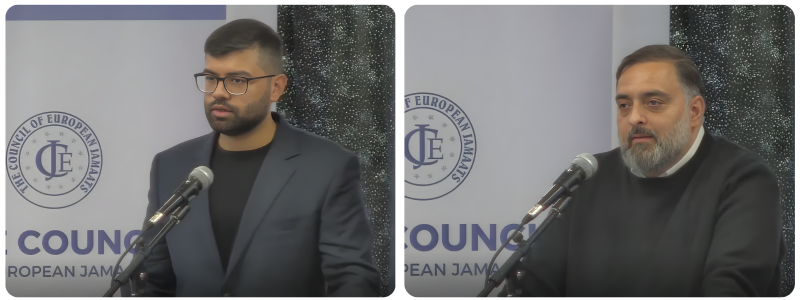
The CoEJ Assistant Secretary General, Br Abbas Hussein, introduced the White Paper and its importance in guiding Jamaats towards a unified approach to safety and security.
The presentation, led by Br Abbas, on behalf of the Office Bearers, highlighted the proposal to establish a European Security Advisory and Response Team (ESART). This team would provide guidance, training, and coordinated support for Jamaats in areas such as incident response, communication, and emergency preparedness. He emphasised that ensuring the safety of community members is not only a logistical responsibility but a moral and religious obligation.
The session also featured a presentation from Br. Hussein Ali Rahemtullah, the CoEJ Councillor from Switzerland, a specialist in behavioural analysis and threat detection.
Br. Hussein Ali explained the concept of threat detection through behavioural analysis, demonstrating how subtle behavioural cues and micro-expressions can assist in identifying potential risks in public spaces. He also introduced the training programme, which has been successfully implemented within law enforcement and can be adapted to suit community settings.
Key Areas of Focus
The white paper proposes a four-pillar framework to enhance security readiness across Jamaats:
- Media and Public Communications: Establishing coordinated responses to security incidents.
- Emergency Procedures: Implementing lockdown, hold-and-secure, and shelter-in-place protocols.
- Incident Notification System: Creating a unified communication channel for alerts and responses.
- Hate Crime Reporting: Standardising data collection and reporting processes across institutions.
A Safety and Security Questionnaire has been circulated to all Jamaats to assess current readiness levels in areas such as CCTV coverage, access control, volunteer training, and emergency planning. At the time of the presentation, six Jamaats had submitted completed responses.
Proposed Action Plan
The proposed action plan outlined a phased approach to implementing the white paper recommendations. The plan includes:
- Standardising emergency response plans across all Jamaats.
- Designing an early warning system for potential threats.
- Developing a centralised incident reporting platform.
- Building partnerships with national security and interfaith organisations.
- Conducting live drills and tabletop exercises.
Training Safety and Security Leads in each Jamaat to ensure consistent readiness.
Outcomes and Action Points
The following action points were agreed upon:
- Establishment of a task group comprising of Br. Abbas Hussein Sikiladha - CoEJ Office Bearer, Councillor Br. Abbas Manji and Councillor Br. Hussein-Ali Rahemtulla to explore partnerships with law enforcement and Internoveco for training delivery.
- Completion of the Safety and Security Questionnaire by all Jamaats within one week.
- Preparation of a training and implementation proposal, including cost analysis, for presentation at the next ExCo meeting.
- Integration of media and communications management within the safety framework to support crisis communication.
Inclusion of cultural sensitivity measures to ensure that implementation respects community privacy and diversity.
Conclusion
The discussion concluded with a shared understanding that safety and security must remain a collective priority for CoEJ and its member Jamaats. Strengthening these frameworks is both a moral duty and a strategic necessity to safeguard community centres, protect Azadari, and ensure that all individuals feel secure in CoEJ spaces.
The discussion closed with appreciation for the presenters and contributors who have initiated this essential work, setting the foundation for an actionable and unified community safety strategy across Europe.