Faith, Exit, and Diversification (FED)
The Faith, Exit, and Diversification (FED) session presented the second white paper at the CoEJ Fourth Executive Council Meeting for Term 2024–2027, outlining a strategic, faith-based response to emerging socio-political and economic challenges facing Shia communities in Europe.
The session on Faith, Exit, and Diversification (FED) marked the presentation of the second white paper during the CoEJ Fourth Executive Council Meeting for Term 2024-2027. The discussion explored a strategic, faith-based response to emerging socio-political and economic challenges faced by Shia communities in Europe.
The session was introduced by acknowledging the increasing concerns among community members over the safety, identity, and sustainability of Muslim life in the West. It was noted that terms such as reverse migration and flight to safety had emerged in recent discourse, prompting the need for structured community reflection.
Presentation Overview
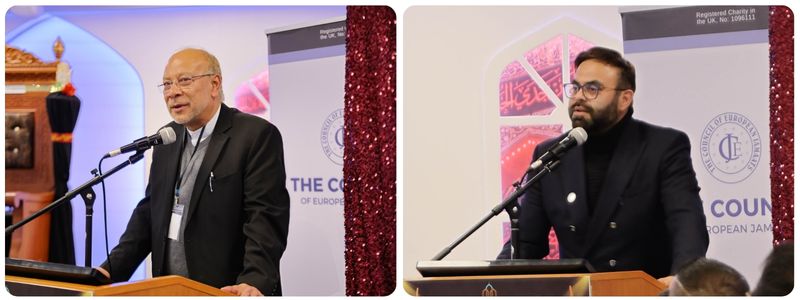
The white paper was presented collaboratively by Br. Arifali Hirji and Shaykh Mujahidali Sheriff, focusing on three central pillars:
- Faith: Reinforcing spiritual grounding and community identity.
- Exit: Exploring migration options through strategic planning.
- Diversification: Strengthening economic and institutional resilience.
Shaykh Mujahidali Sherrif provided an Islamic perspective on Hijrah (migration), referencing Qur’anic teachings and historical precedents. He outlined three types of migration — from disbelief to faith, from disobedience to obedience, and for security or opportunity — stressing that all forms should be undertaken with the pleasure of Allah (SWT) as the ultimate objective.
He reminded attendees that the Khoja Shi'a community itself has a long history of migration driven by faith and circumstance — from Gujarat to East Africa, and subsequently to the West. In today’s climate of Islamophobia and social pressure, he urged members to consider both the moral and practical dimensions of potential migration, underscoring that migration for faith and dignity is a prophetic and Islamic tradition
Strategic Insights by the President
Br. Arifali Hirji expanded on the FED framework, outlining its relevance to CoEJ’s long-term strategy.
He emphasised three key actions:
- Building and maintaining faith schools and madaris to preserve religious education.
- Institutionalising community structures for resilience and representation.
- Planning proactively rather than reactively — “building the ark before it rains.”
Under diversification, he highlighted opportunities for economic collaboration, investment in emerging markets, and skill development in an increasingly digital world. He also proposed creating a shortlist of potential relocation geographies for contingency planning, ensuring any decisions are guided by faith and sustainability, not fear.
Discussion and Reflections
The presentation prompted thoughtful engagement from councillors and delegates.
- Members commended the depth and foresight of the paper, noting its timeliness given the global uncertainty and rising social tensions.
- Collaboration with other regional federations such as Africa Federation and Pakistan Federation to share expertise and develop a unified approach.
- Reflections from an experience in Oman, noting its welcoming environment and relevance to the paper’s proposed models.
- Highlighting the need for practical guidance, professional advice, and faith-based counselling for families considering relocation.
Shaykh Mujahidali clarified that migration should not be understood as abandonment of responsibility but as a proactive step towards preserving faith and fulfilling one’s duty to Allah (SWT) and the Imam of the time (ajtf). He also noted that affordable and conducive destinations — such as the Philippines, Mauritius, and Tanzania — are being explored by regional bodies as potential models for study, education, and settlement
Next Steps and Action Plan
Following the discussion, the following steps were proposed:
- Formation of a Faith, Exit and Diversification Working Group under CoEJ to further research, evaluate, and develop strategies based on the white paper.
- Continuous review of global conditions and identification of five potential geographies suitable for community investment and relocation, subject to ongoing reassessment.
- Collaboration with other Regional Federations and the World Federation to align contingency planning at a global level.
- Development of a Community Resilience and Diversification Strategy, integrating economic, educational, and faith-based initiatives.
Engagement of professionals and scholars to guide practical migration-related decisions within an Islamic ethical framework.
Conclusion
The session concluded with reflections on the balance between faith and pragmatism. The CoEJ leadership reiterated that the white paper does not advocate for immediate migration but emphasises preparedness, unity, and foresight.
Members agreed that strengthening institutions, education, and identity within the West remains a priority, while simultaneously exploring global opportunities for economic and faith-based diversification.
The Faith, Exit and Diversification White Paper represents a call to action — to plan strategically, live purposefully, and uphold the community’s faith and future in an ever-changing world.